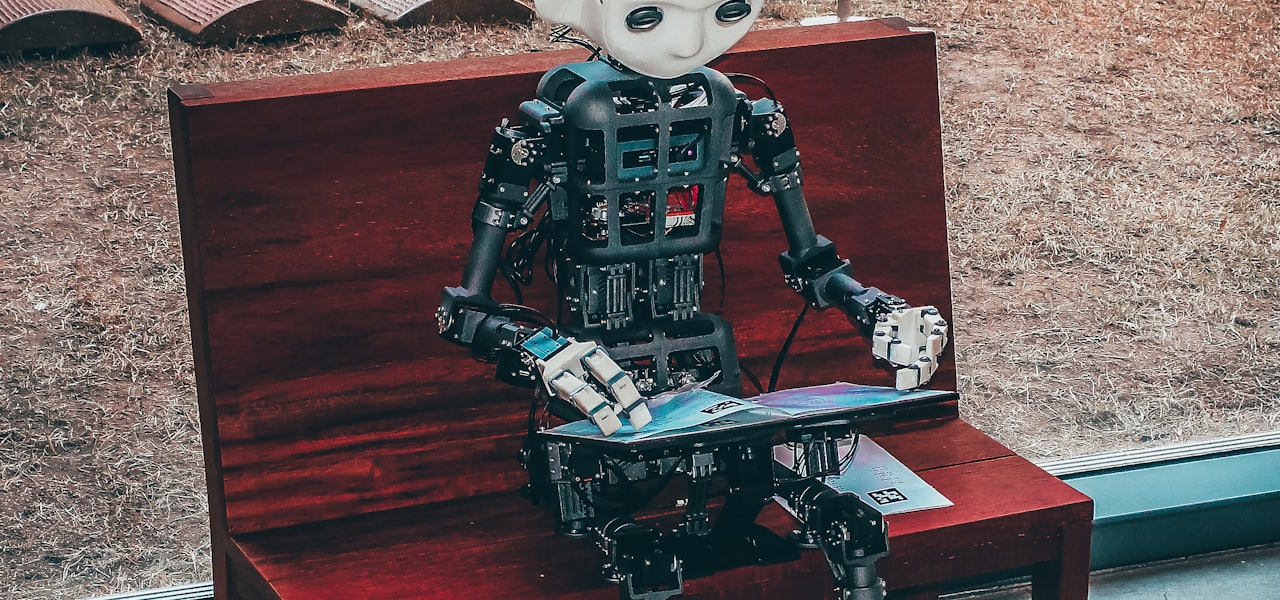
An artificial brain (or artificial mind) is software and hardware with cognitive abilities similar to those of the animal or human brain. Research investigating "artificial brains" and brain emulation plays three important roles in science: An ongoing attempt by neuroscientists to understand how the human brain works, known as cognitive neuroscience. A thought experiment in the philosophy of artificial intelligence, demonstrating that it is possible, at least in theory, to create a machine that has all the capabilities of a human being. A long-term project to create machines exhibiting behavior comparable to those of animals with complex central nervous system such as mammals and most particularly humans. The ultimate goal of creating a machine exhibiting human-like behavior or intelligence is sometimes called strong AI. An example of the first objective is the project reported by Aston University in Birmingham, England where researchers are using biological cells to create "neurospheres" (small clusters of neurons) in order to develop new treatments for diseases including Alzheimer's, motor neurone and Parkinson's disease. The second objective is a reply to arguments such as John Searle's Chinese room argument, Hubert Dreyfus's critique of AI or Roger Penrose's argument in The Emperor's New Mind. These critics argued that there are aspects of human consciousness or expertise that can not be simulated by machines. One reply to their arguments is that the biological processes inside the brain can be simulated to any degree of accuracy. This reply was made as early as 1950, by Alan Turing in his classic paper "Computing Machinery and Intelligence". The third objective is generally called artificial general intelligence by researchers. However, Ray Kurzweil prefers the term "strong AI". In his book The Singularity is Near, he focuses on whole brain emulation using conventional computing machines as an approach to implementing artificial brains, and claims (on grounds of computer power continuing an exponential growth trend) that this could be done by 2025. Henry Markram, director of the Blue Brain project (which is attempting brain emulation), made a similar claim (2020) at the Oxford TED conference in 2009. == Approaches to brain simulation == W. Ross Ashby's pioneering work in cybernetics provided an early mathematical framework for understanding adaptive brain-like systems. In his 1952 book Design for a Brain, Ashby proposed that the brain could be modeled as an ultrastable system that maintains equilibrium through continuous adaptation to environmental perturbations. His approach used differential equations and state-space models to describe how neural systems could exhibit purposeful behavior through feedback mechanisms. Ashby's homeostat, a physical machine built in 1948, demonstrated these principles through an electromechanical device with four interconnected units that automatically adjusted their parameters to maintain stability when disturbed. The homeostat represented one of the first attempts to build an artificial system exhibiting brain-like adaptive behavior, influencing subsequent work in adaptive systems, neural networks, and artificial intelligence. Although direct human brain emulation using artificial neural networks on a high-performance computing engine is a commonly discussed approach, there are other approaches. An alternative artificial brain implementation could be based on Holographic Neural Technology (HNeT) non linear phase coherence/decoherence principles. The analogy has been made to quantum processes through the core synaptic algorithm which has strong similarities to the quantum mechanical wave equation. EvBrain is a form of evolutionary software that can evolve "brainlike" neural networks, such as the network immediately behind the retina. In November 2008, IBM received a US$4.9 million grant from the Pentagon for research into creating intelligent computers. The Blue Brain project is being conducted with the assistance of IBM in Lausanne. The project is based on the premise that it is possible to artificially link the neurons "in the computer" by placing thirty million synapses in their proper three-dimensional position. Some proponents of strong AI speculated in 2009 that computers in connection with Blue Brain and Soul Catcher may exceed human intellectual capacity by around 2015, and that it is likely that we will be able to download the human brain at some time around 2050. While Blue Brain is able to represent complex neural connections on the large scale, the project does not achieve the link between brain activity and behaviors executed by the brain. In 2012, project Spaun (Semantic Pointer Architecture Unified Network) attempted to model multiple parts of the human brain through large-scale representations of neural connections that generate complex behaviors in addition to mapping. Spaun's design recreates elements of human brain anatomy. The model, consisting of approximately 2.5 million neurons, includes features of the visual and motor cortices, GABAergic and dopaminergic connections, the ventral tegmental area (VTA), substantia nigra, and others. The design allows for several functions in response to eight tasks, using visual inputs of typed or handwritten characters and outputs carried out by a mechanical arm. Spaun's functions include copying a drawing, recognizing images, and counting. There are good reasons to believe that, regardless of implementation strategy, the predictions of realising artificial brains in the near future are optimistic. In particular brains (including the human brain) and cognition are not currently well understood, and the scale of computation required is unknown. Another near term limitation is that all current approaches for brain simulation require orders of magnitude larger power consumption compared with a human brain. The human brain consumes about 20 W of power, whereas current supercomputers may use as much as 1 MW—i.e., an order of 100,000 more. == Artificial brain thought experiment == Some critics of brain simulation believe that it is simpler to create general intelligent action directly without imitating nature. Some commentators have used the analogy that early attempts to construct flying machines modeled them after birds, but that modern aircraft do not look like birds.
Standard test image
A standard test image is a digital image file used across different institutions to test image processing and image compression algorithms. By using the same standard test images, different labs are able to compare results, both visually and quantitatively. The images are in many cases chosen to represent natural or typical images that a class of processing techniques would need to deal with. Other test images are chosen because they present a range of challenges to image reconstruction algorithms, such as the reproduction of fine detail and textures, sharp transitions and edges, and uniform regions. == Historical origins == Test images as transmission system calibration material probably date back to the original Paris to Lyon pantelegraph link. Analogue fax equipment (and photographic equipment for the printing trade) were the largest user groups of the standardized image for calibration technology until the coming of television and digital image transmission systems. == Common test image resolutions == The standard resolution of the images is usually 512×512 or 720×576. Most of these images are available as TIFF files from the University of Southern California's Signal and Image Processing Institute. Kodak has released 768×512 images, available as PNGs, that was originally on Photo CD with higher resolution, that are widely used for comparing image compression techniques.
Negobot
Negobot also referred to as Lolita or Lolita chatbot is a chatterbot that was introduced to the public in 2013, designed by researchers from the University of Deusto and Optenet to catch online pedophiles. It is a conversational agent that utilizes natural language processing (NLP), information retrieval (IR) and Automatic Learning. Because the bot poses as a young female in order to entice and track potential predators, it became known in media as the "virtual Lolita", in reference to Vladimir Nabokov's novel. == Background == In 2013, the University of Deusto researchers published a paper on their work with Negobot and disclosed the text online. In their abstract, the researchers addressed the issue that an increasing number of children are using the internet and that these young users are more susceptible to existing internet risks. Their main objective was to create a chatterbot with the ability to trap online predators that posed a threat to children. They intended to deploy the bot into sites frequented by predators such as social networks and chatrooms. The university researchers used information provided by anti-pedophilia activist organization Perverted-Justice, including examples of online encounters and conversations with sexual predators, to supplement the program's artificial intelligence system. == Features == === Programmed persona === The chatterbot takes the guise of a naive and vulnerable 14-year-old girl. The bot's programmers used methods of artificial intelligence and natural language processing to create a conversational agent fluent in typical teenage slang, misspellings, and knowledge of pop culture. Through these linguistic features, the bot is able to mimic the conversational style of young teenagers. It also features split personalities and seven different patterns of conversation. Negobot's primary creator, Dr. Carlos Laorden, expressed the significance of the bot's distinguishable style of communication, stating that normally, "chatbots tend to be very predictable. Their behavior and interest in a conversation are flat, which is a problem when attempting to detect untrustworthy targets like paedophiles." What makes Negobot different is its game theory feature, which makes it able to "maintain a much more realistic conversation." Apart from being able to imitate a stereotypical teenager, the program is also able to translate messages into different languages. === Game theory === Negobot's designers programmed it with the ability to treat conversations with potential predators as if it were a game, the objective being to collect as much information on the suspect as possible that could provide evidence of pedophilic characteristics and motives. The use of game theory shapes the decisions the bot makes and the overall direction of the conversation. The bot initiates its undercover operations by entering a chat as a passive participant, waiting to be chatted by a user. Once a user elicits conversation, the bot will frame the conversation in such a way that keeps the target engaged, extracting personal information and discouraging it from leaving the chat. The information is then recorded to be potentially sent to the police. If the target seems to lose interest, the bot attempts to make it feel guilty by expressing sentiments of loneliness and emotional need through strategic, formulated responses, ultimately prolonging interaction. In addition, the bot may provide fake information about itself in attempt to lure the target into physical meetings. === Limitations === Despite being able to carry out a realistic conversation, Negobot is still unable to detect linguistic subtleties in the messages of others, including sarcasm. == Controversy == John Carr, a specialist in online child safety, expressed his concern to BBC over the legality of this undercover investigation. He claimed that using the bot on unsuspecting internet users could be considered a form of entrapment or harassment. The type of information that Negobot collects from potential online predators, he said, is unlikely to be upheld in court. Furthermore, he warned that relying on only software without any real-world policing risks enticing individuals to do or say things that they would not have if real-world policing were a factor.
U-Net
U-Net is a convolutional neural network that was developed for image segmentation. The network is based on a fully convolutional neural network whose architecture was modified and extended to work with fewer training images and to yield more precise segmentation. Segmentation of a 512 × 512 image takes less than a second on a modern (2015) GPU using the U-Net architecture. The U-Net architecture has also been employed in diffusion models for iterative image denoising. This technology underlies many modern image generation models, such as DALL-E, Midjourney, and Stable Diffusion. U-Net is also being explored for language models. Tokenization is not a separate step, allowing the model to more easily understand spelling and concurrently vectorizing / tokenizing higher level concepts. == Description == The U-Net architecture stems from the so-called "fully convolutional network". The main idea is to supplement a usual contracting network by successive layers, where pooling operations are replaced by upsampling operators. Hence these layers increase the resolution of the output. A successive convolutional layer can then learn to assemble a precise output based on this information. One important modification in U-Net is that there are a large number of feature channels in the upsampling part, which allow the network to propagate context information to higher resolution layers. As a consequence, the expansive path is more or less symmetric to the contracting part, and yields a u-shaped architecture. The network only uses the valid part of each convolution without any fully connected layers. To predict the pixels in the border region of the image, the missing context is extrapolated by mirroring the input image. This tiling strategy is important to apply the network to large images, since otherwise the resolution would be limited by the GPU memory. Recently, there had also been an interest in receptive field based U-Net models for medical image segmentation. == Network architecture == The network consists of a contracting path and an expansive path, which gives it the u-shaped architecture. The contracting path is a typical convolutional network that consists of repeated application of convolutions, each followed by a rectified linear unit (ReLU) and a max pooling operation. During the contraction, the spatial information is reduced while feature information is increased. The expansive pathway combines the feature and spatial information through a sequence of up-convolutions and concatenations with high-resolution features from the contracting path. == Applications == There are many applications of U-Net in biomedical image segmentation, such as brain image segmentation (''BRATS'') and liver image segmentation ("siliver07") as well as protein binding site prediction. U-Net implementations have also found use in the physical sciences, for example in the analysis of micrographs of materials. Variations of the U-Net have also been applied for medical image reconstruction. Here are some variants and applications of U-Net as follows: Pixel-wise regression using U-Net and its application on pansharpening; 3D U-Net: Learning Dense Volumetric Segmentation from Sparse Annotation; TernausNet: U-Net with VGG11 Encoder Pre-Trained on ImageNet for Image Segmentation. Image-to-image translation to estimate fluorescent stains In binding site prediction of protein structure. == History == U-Net was created by Olaf Ronneberger, Philipp Fischer, Thomas Brox in 2015 and reported in the paper "U-Net: Convolutional Networks for Biomedical Image Segmentation". It is an improvement and development of FCN: Evan Shelhamer, Jonathan Long, Trevor Darrell (2014). "Fully convolutional networks for semantic segmentation".
Apache OpenNLP
The Apache OpenNLP library is a machine learning based toolkit for the processing of natural language text. It supports the most common NLP tasks, such as language detection, tokenization, sentence segmentation, part-of-speech tagging, named entity extraction, chunking, parsing and coreference resolution. These tasks are usually required to build more advanced text processing services.
Problem solving
Problem solving is the process of achieving a goal by overcoming obstacles, a frequent part of most activities. Problems in need of solutions range from simple personal tasks (e.g. how to get from point A to B) to complex issues in business and technical fields. The former is an example of simple problem solving (SPS) addressing one issue, whereas the latter is complex problem solving (CPS) with multiple interrelated obstacles. Another classification of problem-solving tasks is into well-defined problems with specific obstacles and goals, and ill-defined problems in which the current situation is troublesome but it is not clear what kind of resolution to aim for. Similarly, one may distinguish formal or fact-based problems requiring psychometric intelligence, versus socio-emotional problems which depend on the changeable emotions of individuals or groups, such as tactful behavior, fashion, or gift choices. Solutions require sufficient resources and knowledge to attain the goal. Professionals such as lawyers, doctors, programmers, and consultants are largely problem solvers for issues that require technical skills and knowledge beyond general competence. Many businesses have found profitable markets by recognizing a problem and creating a solution: the more widespread and inconvenient the problem, the greater the opportunity to develop a scalable solution. There are many specialized problem-solving techniques and methods in fields such as science, engineering, business, medicine, mathematics, computer science, philosophy, and social organization. The mental techniques to identify, analyze, and solve problems are studied in psychology and cognitive sciences. Also widely researched are the mental obstacles that prevent people from finding solutions; problem-solving impediments include confirmation bias, mental set, and functional fixedness. == Definition == The term problem solving has a slightly different meaning depending on the discipline. For instance, it is a mental process in psychology and a computerized process in computer science. There are two different types of problems: ill-defined and well-defined; different approaches are used for each. Well-defined problems have specific end goals and clearly expected solutions, while ill-defined problems do not. Well-defined problems allow for more initial planning than ill-defined problems. Solving problems sometimes involves dealing with pragmatics (the way that context contributes to meaning) and semantics (the interpretation of the problem). The ability to understand what the end goal of the problem is, and what rules could be applied, represents the key to solving the problem. Sometimes a problem requires abstract thinking or coming up with a creative solution. Problem solving has two major domains: mathematical problem solving and personal problem solving. Each concerns some difficulty or barrier that is encountered. === Psychology === Problem solving in psychology refers to the process of finding solutions to problems encountered in life. Solutions to these problems are usually situation- or context-specific. The process starts with problem finding and problem shaping, in which the problem is discovered and simplified. The next step is to generate possible solutions and evaluate them. Finally a solution is selected to be implemented and verified. Problems have an end goal to be reached; how you get there depends upon problem orientation (problem-solving coping style and skills) and systematic analysis. Mental health professionals study the human problem-solving processes using methods such as introspection, behaviorism, simulation, computer modeling, and experiment. Social psychologists look into the person-environment relationship aspect of the problem and independent and interdependent problem-solving methods. Problem solving has been defined as a higher-order cognitive process and intellectual function that requires the modulation and control of more routine or fundamental skills. Empirical research shows many different strategies and factors influence everyday problem solving. Rehabilitation psychologists studying people with frontal lobe injuries have found that deficits in emotional control and reasoning can be re-mediated with effective rehabilitation and could improve the capacity of injured persons to resolve everyday problems. Interpersonal everyday problem solving is dependent upon personal motivational and contextual components. One such component is the emotional valence of "real-world" problems, which can either impede or aid problem-solving performance. Researchers have focused on the role of emotions in problem solving, demonstrating that poor emotional control can disrupt focus on the target task, impede problem resolution, and lead to negative outcomes such as fatigue, depression, and inertia. In conceptualization,human problem solving consists of two related processes: problem orientation, and the motivational/attitudinal/affective approach to problematic situations and problem-solving skills. People's strategies cohere with their goals and stem from the process of comparing oneself with others. === Cognitive sciences === Among the first experimental psychologists to study problem solving were the Gestaltists in Germany, such as Karl Duncker in The Psychology of Productive Thinking (1935). Perhaps best known is the work of Allen Newell and Herbert A. Simon. Experiments in the 1960s and early 1970s asked participants to solve relatively simple, well-defined, but not previously seen laboratory tasks. These simple problems, such as the Tower of Hanoi, admitted optimal solutions that could be found quickly, allowing researchers to observe the full problem-solving process. Researchers assumed that these model problems would elicit the characteristic cognitive processes by which more complex "real world" problems are solved. An outstanding problem-solving technique found by this research is the principle of decomposition. === Computer science === Much of computer science and artificial intelligence involves designing automated systems to solve a specified type of problem: to accept input data and calculate a correct or adequate response, reasonably quickly. Algorithms are recipes or instructions that direct such systems, written into computer programs. Steps for designing such systems include problem determination, heuristics, root cause analysis, de-duplication, analysis, diagnosis, and repair. Analytic techniques include linear and nonlinear programming, queuing systems, and simulation. A large, perennial obstacle is to find and fix errors in computer programs: debugging. === Logic === Formal logic concerns issues like validity, truth, inference, argumentation, and proof. In a problem-solving context, it can be used to formally represent a problem as a theorem to be proved, and to represent the knowledge needed to solve the problem as the premises to be used in a proof that the problem has a solution. The use of computers to prove mathematical theorems using formal logic emerged as the field of automated theorem proving in the 1950s. It included the use of heuristic methods designed to simulate human problem solving, as in the Logic Theory Machine, developed by Allen Newell, Herbert A. Simon and J. C. Shaw, as well as algorithmic methods such as the resolution principle developed by John Alan Robinson. In addition to its use for finding proofs of mathematical theorems, automated theorem-proving has also been used for program verification in computer science. In 1958, John McCarthy proposed the advice taker, to represent information in formal logic and to derive answers to questions using automated theorem-proving. An important step in this direction was made by Cordell Green in 1969, who used a resolution theorem prover for question-answering and for such other applications in artificial intelligence as robot planning. The resolution theorem-prover used by Cordell Green bore little resemblance to human problem solving methods. In response to criticism of that approach from researchers at MIT, Robert Kowalski developed logic programming and SLD resolution, which solves problems by problem decomposition. He has advocated logic for both computer and human problem solving and computational logic to improve human thinking. === Engineering === When products or processes fail, problem solving techniques can be used to develop corrective actions that can be taken to prevent further failures. Such techniques can also be applied to a product or process prior to an actual failure event—to predict, analyze, and mitigate a potential problem in advance. Techniques such as failure mode and effects analysis can proactively reduce the likelihood of problems. In either the reactive or the proactive case, it is necessary to build a causal explanation through a process of diagnosis. In deriving an explanation of effects in terms of causes, abduction generates new ideas or hypothes
Deep learning in photoacoustic imaging
Photoacoustic imaging (PA) is based on the photoacoustic effect, in which optical absorption causes a rise in temperature, which causes a subsequent rise in pressure via thermo-elastic expansion. This pressure rise propagates through the tissue and is sensed via ultrasonic transducers. Due to the proportionality between the optical absorption, the rise in temperature, and the rise in pressure, the ultrasound pressure wave signal can be used to quantify the original optical energy deposition within the tissue. Photoacoustic imaging has applications of deep learning in both photoacoustic computed tomography (PACT) and photoacoustic microscopy (PAM). PACT utilizes wide-field optical excitation and an array of unfocused ultrasound transducers. Similar to other computed tomography methods, the sample is imaged at multiple view angles, which are then used to perform an inverse reconstruction algorithm based on the detection geometry (typically through universal backprojection, modified delay-and-sum, or time reversal ) to elicit the initial pressure distribution within the tissue. PAM on the other hand uses focused ultrasound detection combined with weakly focused optical excitation (acoustic resolution PAM or AR-PAM) or tightly focused optical excitation (optical resolution PAM or OR-PAM). PAM typically captures images point-by-point via a mechanical raster scanning pattern. At each scanned point, the acoustic time-of-flight provides axial resolution while the acoustic focusing yields lateral resolution. == Applications of deep learning in PACT == The first application of deep learning in PACT was by Reiter et al. in which a deep neural network was trained to learn spatial impulse responses and locate photoacoustic point sources. The resulting mean axial and lateral point location errors on 2,412 of their randomly selected test images were 0.28 mm and 0.37 mm respectively. After this initial implementation, the applications of deep learning in PACT have branched out primarily into removing artifacts from acoustic reflections, sparse sampling, limited-view, and limited-bandwidth. There has also been some recent work in PACT toward using deep learning for wavefront localization. There have been networks based on fusion of information from two different reconstructions to improve the reconstruction using deep learning fusion based networks. === Using deep learning to locate photoacoustic point sources === Traditional photoacoustic beamforming techniques modeled photoacoustic wave propagation by using detector array geometry and the time-of-flight to account for differences in the PA signal arrival time. However, this technique failed to account for reverberant acoustic signals caused by acoustic reflection, resulting in acoustic reflection artifacts that corrupt the true photoacoustic point source location information. In Reiter et al., a convolutional neural network (similar to a simple VGG-16 style architecture) was used that took pre-beamformed photoacoustic data as input and outputted a classification result specifying the 2-D point source location. ==== Deep learning for PA wavefront localization ==== Johnstonbaugh et al. was able to localize the source of photoacoustic wavefronts with a deep neural network. The network used was an encoder-decoder style convolutional neural network. The encoder-decoder network was made of residual convolution, upsampling, and high field-of-view convolution modules. A Nyquist convolution layer and differentiable spatial-to-numerical transform layer were also used within the architecture. Simulated PA wavefronts served as the input for training the model. To create the wavefronts, the forward simulation of light propagation was done with the NIRFast toolbox and the light-diffusion approximation, while the forward simulation of sound propagation was done with the K-Wave toolbox. The simulated wavefronts were subjected to different scattering mediums and Gaussian noise. The output for the network was an artifact free heat map of the targets axial and lateral position. The network had a mean error rate of less than 30 microns when localizing target below 40 mm and had a mean error rate of 1.06 mm for localizing targets between 40 mm and 60 mm. With a slight modification to the network, the model was able to accommodate multi target localization. A validation experiment was performed in which pencil lead was submerged into an intralipid solution at a depth of 32 mm. The network was able to localize the lead's position when the solution had a reduced scattering coefficient of 0, 5, 10, and 15 cm−1. The results of the network show improvements over standard delay-and-sum or frequency-domain beamforming algorithms and Johnstonbaugh proposes that this technology could be used for optical wavefront shaping, circulating melanoma cell detection, and real-time vascular surgeries. === Removing acoustic reflection artifacts (in the presence of multiple sources and channel noise) === Building on the work of Reiter et al., Allman et al. utilized a full VGG-16 architecture to locate point sources and remove reflection artifacts within raw photoacoustic channel data (in the presence of multiple sources and channel noise). This utilization of deep learning trained on simulated data produced in the MATLAB k-wave library, and then later reaffirmed their results on experimental data. === Ill-posed PACT reconstruction === In PACT, tomographic reconstruction is performed, in which the projections from multiple solid angles are combined to form an image. When reconstruction methods like filtered backprojection or time reversal, are ill-posed inverse problems due to sampling under the Nyquist-Shannon's sampling requirement or with limited-bandwidth/view, the resulting reconstruction contains image artifacts. Traditionally these artifacts were removed with slow iterative methods like total variation minimization, but the advent of deep learning approaches has opened a new avenue that utilizes a priori knowledge from network training to remove artifacts. In the deep learning methods that seek to remove these sparse sampling, limited-bandwidth, and limited-view artifacts, the typical workflow involves first performing the ill-posed reconstruction technique to transform the pre-beamformed data into a 2-D representation of the initial pressure distribution that contains artifacts. Then, a convolutional neural network (CNN) is trained to remove the artifacts, in order to produce an artifact-free representation of the ground truth initial pressure distribution. ==== Using deep learning to remove sparse sampling artifacts ==== When the density of uniform tomographic view angles is under what is prescribed by the Nyquist-Shannon's sampling theorem, it is said that the imaging system is performing sparse sampling. Sparse sampling typically occurs as a way of keeping production costs low and improving image acquisition speed. The typical network architectures used to remove these sparse sampling artifacts are U-net and Fully Dense (FD) U-net. Both of these architectures contain a compression and decompression phase. The compression phase learns to compress the image to a latent representation that lacks the imaging artifacts and other details. The decompression phase then combines with information passed by the residual connections in order to add back image details without adding in the details associated with the artifacts. FD U-net modifies the original U-net architecture by including dense blocks that allow layers to utilize information learned by previous layers within the dense block. Another technique was proposed using a simple CNN based architecture for removal of artifacts and improving the k-wave image reconstruction. ==== Removing limited-view artifacts with deep learning ==== When a region of partial solid angles are not captured, generally due to geometric limitations, the image acquisition is said to have limited-view. As illustrated by the experiments of Davoudi et al., limited-view corruptions can be directly observed as missing information in the frequency domain of the reconstructed image. Limited-view, similar to sparse sampling, makes the initial reconstruction algorithm ill-posed. Prior to deep learning, the limited-view problem was addressed with complex hardware such as acoustic deflectors and full ring-shaped transducer arrays, as well as solutions like compressed sensing, weighted factor, and iterative filtered backprojection. The result of this ill-posed reconstruction is imaging artifacts that can be removed by CNNs. The deep learning algorithms used to remove limited-view artifacts include U-net and FD U-net, as well as generative adversarial networks (GANs) and volumetric versions of U-net. One GAN implementation of note improved upon U-net by using U-net as a generator and VGG as a discriminator, with the Wasserstein metric and gradient penalty to stabilize training (WGAN-GP). ==== Pixel-wise interpolation